
 Produkty
Producenci
Produkty
Producenci
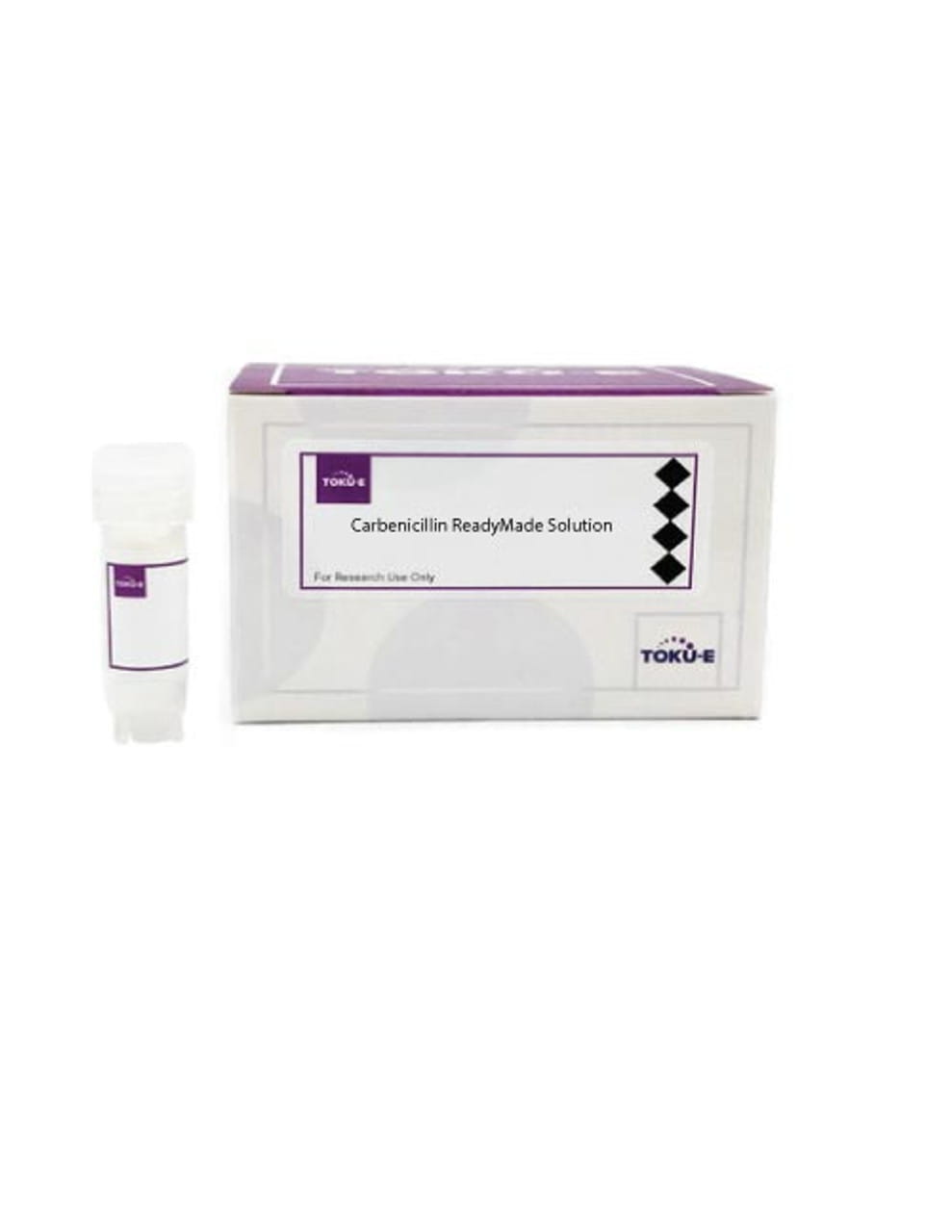
Carbenicillin ReadyMade™ Solution

Opis
Produkt przeznaczony wyłącznie do badań. Nie nadaje się do spożycia. Więcej informacji na stronie producenta www.toku-e.com
Carbenicillin ReadyMadeTM solution is provided as a sterile filtered solution of Carbenicillin Disodium formulated in 20~30% ethanol at a concentration of 100 mg/ml. It has been filter-sterilized using a 0.2 μm filter.
Carbenicillin Disodium is a carboxypenicillin antibiotic routinely used for gene selection. The compound interferes with peptidoglycan synthesis, thus it can also be used to study the role of penicillin-sensitive transpeptidases in the formation of cell walls. The carboxycillins are susceptible to degradation by β-lactamase enzymes. Carbenicillin is typically used at a concentration of 50-100 μg/ml.
We also offer:
CAS Number:4800-94-6
Molecular Formula: C17H16N2Na2O6S
Molecular Weight:422.36
Spectrum: The activity of Carbenicillin is limited to primarily Gram-negative bacteria including Pseudomonas aeruginosa and common enteric bacteria. It has limited activity against Gram-positive bacteria.
Microbiology Applications:
Carbenicillin Disodium is often used to select for cells that have been transformed with a plasmid containing the ampR gene which confers resistance to ampicillin and Carbenicillin. Carbenicillin Disodium can be substituted for Ampicillin Sodium for better stability and to avoid formation of satellite colonies.
Carbenicillin Disodium is a preferred alternative to ampicillin due to its increased stability in the presence of heat and low pH environments. Substituting Carbenicillin Disodium for ampicillin also reduces the risk of satellite colonies appearing on growth media during extended periods of incubation.
Plant Biology Applications:
Carbenicillin Disodium, USP is routinely used in Agrobacterium-mediated transformation protocols to select for resistant Agrobacterium and transformed plants. Carbenicillin Disodium has low toxicity to plant tissues.
RNA-guided genome editing using the CRISPR/Cas9 system was used with tobacco protoplasts and whole-plant transformation. Using multiplexing gRNA, Two genes (NtPDS and NtPDR6) were mutated and transgenic tobacco plants with successfully obtained containing both mutations (Gao et al, 2015).
Mechanism of Action:Carbenicillin interferes with PBP (penicillin binding protein) activity otherwise involved in the final phase of peptidoglycan synthesis. PBPs are enzymes which catalyze a pentaglycine crosslink between alanine and lysine residues. Without a pentaglycine crosslink, the integrity of the cell wall is severely compromised ultimately leading to cell lysis. Resistance to β-lactams is commonly due to cells containing plasmid-encoded β-lactamases.
Storage Conditions:−20°C
References:
Bush K and Bradford PA (2016) B-Lactams and B-Lactamase inhibitors: An overview. Cold Spring Harb.Perspect. Med 6(8): pii: a025247 PMID 27329032
Gao J et al (2015) CRISPR/Cas9-mediated targeted mutagenesis in Nicotiana tabacum. Plant Mol. Biol 87(1):99-110 PMID 25344637
Matsuda N, Isuzugawa K, Gao M, Takshina T and Nishimura K. (2004) Development of Agrobacterium-mediated transformation system in pear cultivars with low-regeneration frequency. Hortsci. 39(4)
Pitout JD, Sanders CC, Sanders WE (1997) Antimicrobial resistance with focus on beta-lactam resistance in Gram-negative bacilli. Am J Med 103:51-59 PMID 9236486
Dane techniczne
| Opakowanie | 10 x 1 ml |